
Last updated November 23, 2026
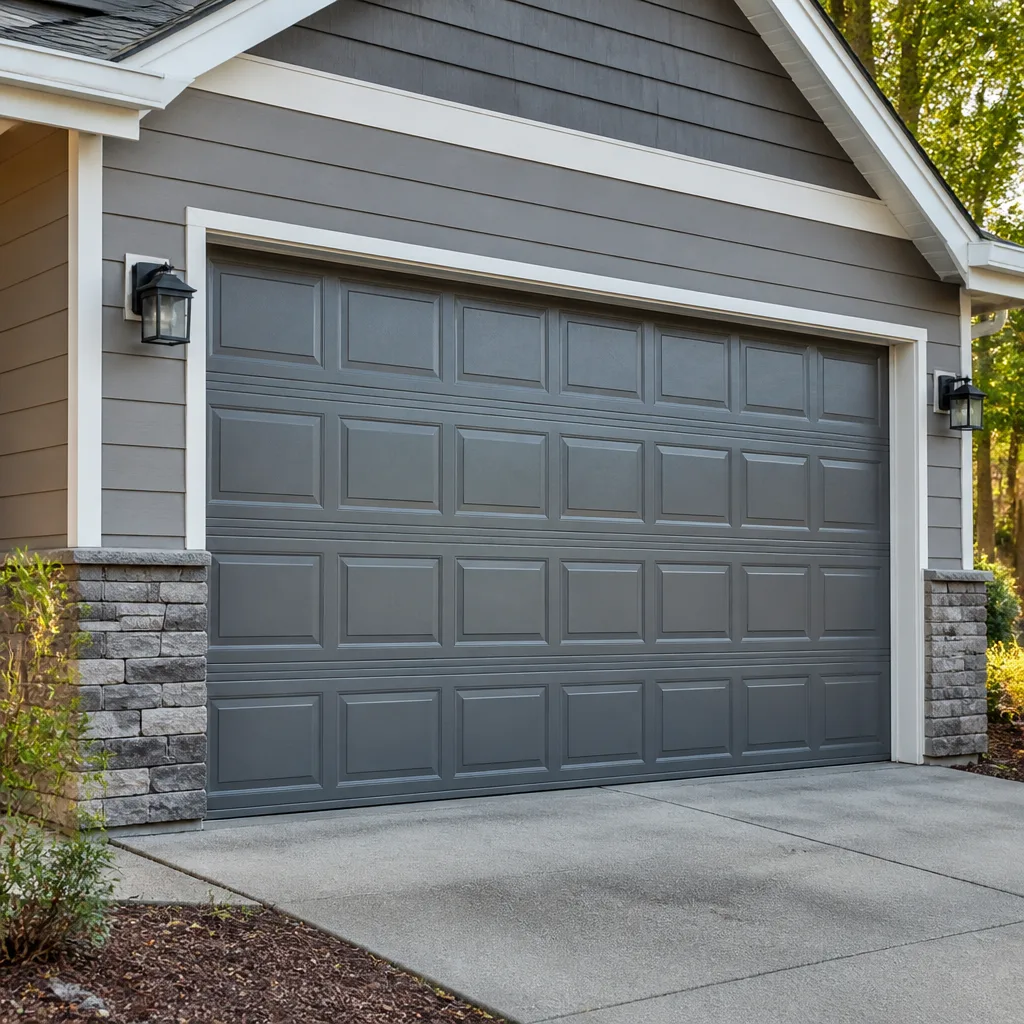 Raised-panel steel
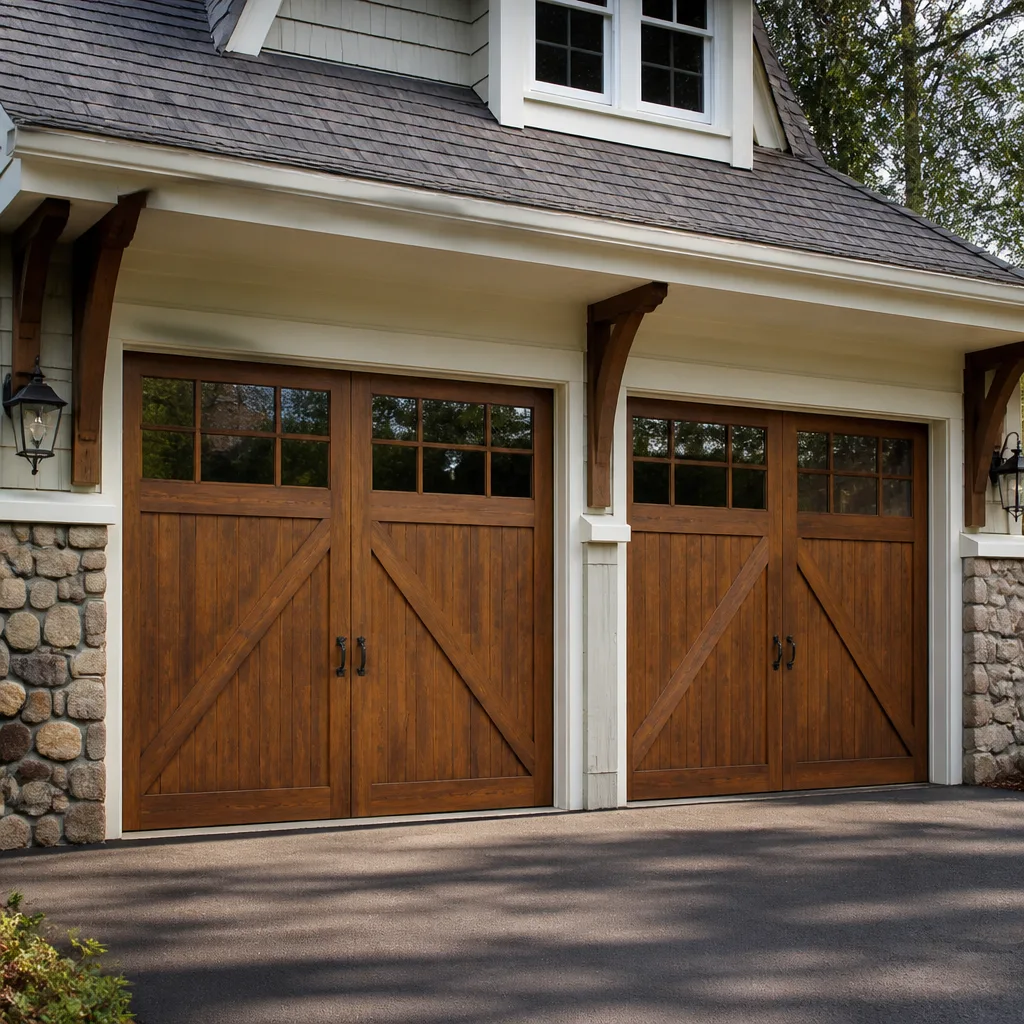 Carriage house
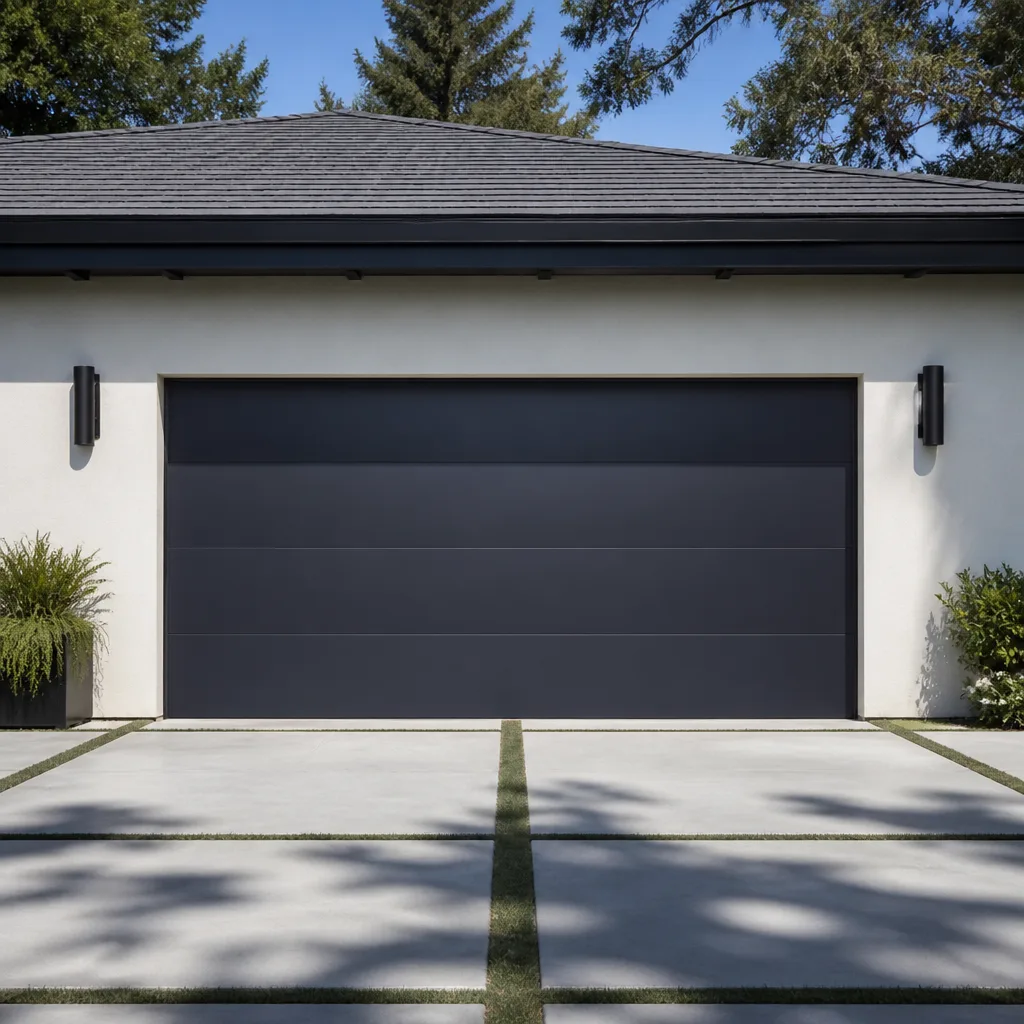 Modern flush
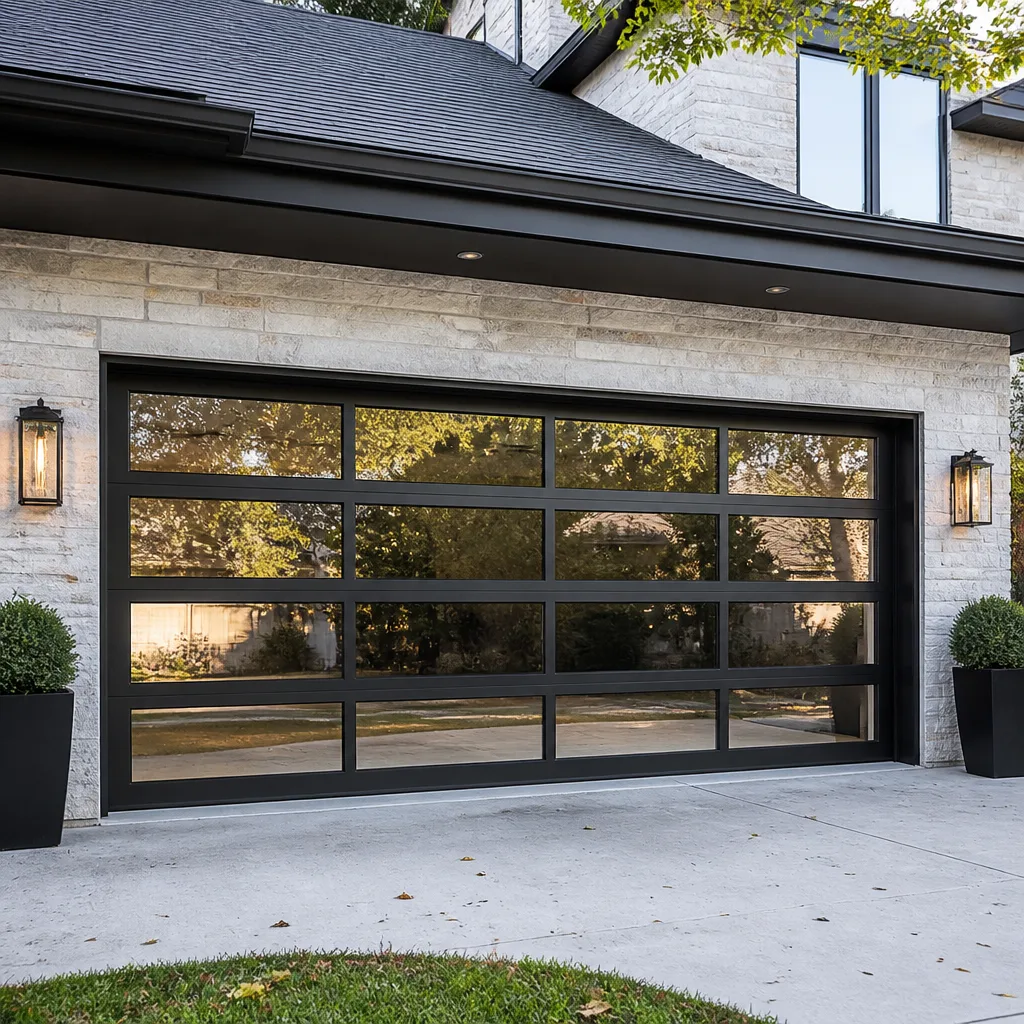 Full-view glass
 LiftMaster openers
 Chamberlain openers
Full 25-point door and opener safety check with every visit - springs, cables, rollers, tracks, and your LiftMaster or Chamberlain opener included
You get a price before we start. It does not change when the pro arrives.
Get your free estimateGarage Door Permits, Codes & Inspections in Cherry Hill, NJ: What You Need to Know
Most Cherry Hill homeowners assume a garage door is like a dishwasher: you swap it out, nobody asks questions, and life moves on. That assumption holds up fine until a title search turns over an unpermitted alteration, and a sale that was supposed to close in three weeks suddenly needs a municipal inspection and a paperwork trail that should have been handled years earlier. Garage doors are part of the building envelope, and in New Jersey the state construction code treats them that way. This guide walks through exactly when Cherry Hill Township wants a permit, what the state Uniform Construction Code expects from the work, how wind load factors into panel choice, and where a straightforward like-for-like swap ends and a permitted project begins.
Quick Answer
In Cherry Hill, NJ, a permit is generally required when you install a new garage door in a new opening, change the size or structure of the opening, or add or rewire an opener’s electrical circuit. A straight like-for-like replacement of the same size door in the same opening, with no structural or electrical changes, is often treated as ordinary maintenance and may not need a permit, but you should confirm that with Cherry Hill Township’s building department before work starts, because the final word is theirs and not ours. Spring, cable, roller and opener repairs are repair work, not permitted construction.
Styles & brands we work with
- Raised-panel steel
- Carriage house
- Modern flush
- Full-view glass
- LiftMaster openers
- Chamberlain openers
Table of Contents
- When Does Cherry Hill Require a Permit for Garage Door Work?
- What “Like-for-Like Replacement” Actually Means
- How New Jersey’s Uniform Construction Code Applies to Garage Doors
- What an Inspector Actually Looks At
- Wind Load Requirements and Why Panel Choice Matters
- The Cherry Hill Permit Process, Step by Step
- Typical Permit Timeline and What Slows It Down
- Common Mistakes to Avoid
When Does Cherry Hill Require a Permit for Garage Door Work?
The short rule: if the work changes the building, it needs a permit. If the work restores the building to what it already was, it usually doesn’t. Cherry Hill Township’s building department applies that principle the same way most New Jersey municipalities do, because the underlying authority is the state code, not a local preference.
Here’s how the situations usually break down:
- New door in a new opening. Permit required. This covers a garage addition, a carport being enclosed, or converting a wall section into a garage bay.
- Enlarging or reducing the opening. Permit required. Widening a single-car opening to fit a double door means cutting the header, reframing, and possibly adding a beam. That’s structural work and it gets reviewed.
- Changing the door type in a way that alters the framing. Permit required in most cases. Going from a sectional door to a one-piece tilt door, for example, can change how the load transfers to the header.
- Adding a new opener circuit or moving an existing one. Electrical permit required. If the opener is plugged into an existing outlet that stays put, no electrical permit is needed.
- Replacing the door with the same size, same type, same opening. Often no permit. This is the like-for-like case, covered in detail below.
- Repairing a spring, cable, roller, hinge, panel or opener. No permit. Repair restores function; it doesn’t alter the structure.
We want to be direct about the limits of our role here. We’re garage door specialists. We’re not the building department, and we don’t issue permits or make the call on whether your specific job needs one. What we can do is tell you, before we order a door or schedule a crew, whether the job in front of you looks like permitted work based on what Cherry Hill usually requires, so you can call the township and get a definitive answer. That conversation takes ten minutes and prevents months of hassle.
That ten minutes matters most on a replacement in a Cherry Hill neighborhood where homes were built in waves, because those homes tend to have openings that were framed to whatever door spec was standard at the time. If the current door is original and the opening has been modified at some point, the record at the township may not match what’s actually in your garage. That’s a conversation worth having before you buy a door, not after.
What “Like-for-Like Replacement” Actually Means
Like-for-like replacement is the phrase that decides whether your project needs a permit, and it gets misused constantly. Legally, it means the new door matches the existing one closely enough that the structure, the opening, and the building’s compliance don’t change. It does not mean “looks similar from the street.”
For a swap to genuinely qualify as like-for-like, these conditions need to hold:
- Same opening dimensions. The rough opening in the wall is unchanged. No header work, no reframing, no widening or shortening.
- Same door type and operation. A sectional door replaces a sectional door. A roll-up replaces a roll-up. You aren’t changing how the door moves or how it stores overhead.
- No change to the electrical. The opener stays on its existing circuit, or you’re not installing an opener at all.
- No structural repair involved. The framing around the opening is sound. If a rotted header or a cracked jamb has to be replaced as part of the job, that’s structural work and it changes the permit picture.
- Wind load compliance maintained. If the original door was rated for the wind load the code requires at that location, the replacement needs to meet or exceed it.
Anything outside that list is likely to need a permit. And here’s the part that catches people: if the original installation was never permitted, the current door sitting in your garage may not actually represent a compliant baseline. When a Cherry Hill homeowner is replacing a door on a house that’s changed hands several times, we ask about the history, because a 20-year-old unpermitted alteration doesn’t become legal just because time passed. The township can still flag it.
We work on the door you already have across the brands most Cherry Hill garages carry, from Wayne Dalton and Craftsman to Raynor and LiftMaster, and in our experience the like-for-like question usually gets answered by measuring the opening, checking the header, and reading the manufacturer’s spec sheet next to what’s installed. When those three line up, the job is straightforward. When they don’t, it’s a conversation.
How New Jersey’s Uniform Construction Code Applies to Garage Doors
New Jersey runs its building code through the Uniform Construction Code (UCC), which adopts the model codes and administers them through local construction offices. Cherry Hill Township has its own construction office, and that’s where a garage door permit application goes. The UCC is the reason the rules look similar across New Jersey towns even when the paperwork differs.
The UCC pulls in several subcodes that touch a garage door installation:
- Building subcode. Governs the opening, the header, the framing, and the door assembly as part of the building envelope.
- Electrical subcode. Governs any new circuit, receptacle, or hardwired connection for an opener, and the safety reverse and photo-eye systems tied to it.
- Energy subcode. Applies to the thermal performance of the door when it’s part of a conditioned space or an attached garage wall assembly. This matters more than people expect in Cherry Hill, where garages on older homes sit against living space and an uninsulated door pulls heat out of the house all winter.
What the UCC doesn’t do is tell you whether your particular job needs a permit. That determination gets made by the local construction official when the application is reviewed. This is why we tell Cherry Hill homeowners to call the building department with a plain description of the work rather than trying to interpret the code themselves. “Same size door, same opening, no electrical changes” gets a clear answer. “I’m replacing my garage door” does not.
One practical note: the UCC also covers the safety devices on automatic openers. Photo-eye reversal and the entrapment protection requirements are part of what makes an opener installation compliant, and they’re checked. If your current opener predates those requirements, a permitted installation is a good moment to bring the whole assembly up to standard rather than carrying the old setup forward.
What an Inspector Actually Looks At
Homeowners picture an inspector walking around with a clipboard and finding something to fail. In reality, a garage door inspection under the UCC is a focused checklist, and knowing the list removes most of the anxiety.
The inspection typically covers:
- The opening and framing. Is the rough opening the size shown on the plans? Is the header sized and installed correctly? Is the jamb plumb and square?
- Fastening and anchorage. Are the tracks and brackets anchored into solid framing rather than drywall or sheathing alone? Are the fasteners the type and size the manufacturer specifies?
- The door assembly itself. Is the installed door the model and rating shown on the application? Does it carry the labeling the manufacturer provides for wind load and, where relevant, thermal performance?
- The counterbalance system. Are the springs, cables, and drums installed per the manufacturer’s instructions? Are the safety cables present on extension spring systems?
- Opener safety devices. Does the door reverse on obstruction? Are the photo-eyes mounted at the correct height, aligned, and functioning? Is the manual release accessible?
- Electrical connections. Is the opener circuit properly installed, protected, and grounded? Are connections made in accessible boxes?
What an inspector does not do is test your spring tension, measure how smoothly your door runs, or evaluate whether the installer set the travel limits well. Those are quality issues, and they’re on whoever installed the door. This is one reason we push homeowners to treat the inspection as a floor and not a ceiling. Passing inspection means the installation is compliant. It doesn’t mean it’s good. A door that closes fully and quietly, with springs matched to the door’s weight, is a separate standard.
We’ve also seen Cherry Hill homeowners surprised that the inspector wants the opener’s safety reverse tested in front of them. That’s normal. It takes thirty seconds and it’s the single most important safety function on the whole assembly.
Wind Load Requirements and Why Panel Choice Matters
New Jersey’s building code requires garage doors to resist the wind pressures expected at the building’s location, and the design pressure depends on factors like exposure, height, and the door’s size. Cherry Hill sits inland, so the numbers here are moderate compared to what shore towns deal with, but moderate is not zero. A wide, lightly built door with a lot of unsupported panel span is a different structure than a narrow one, and the code treats it that way.
Practically, wind load affects the door in three places:
- Panel construction. Steel gauge, panel profile, and whether the door has wind-load reinforcement struts all factor in. A builder-grade door without struts may meet the code for a single-car opening and fail for a double.
- Track and bracket anchoring. The door can only resist what it’s attached to. Anchors into a proper header and jamb hold; anchors into sheathing alone don’t.
- Manufacturer labeling. Doors are tested and labeled for design pressure, and the label is what the inspector looks for. Buying an unrated door from a source that can’t provide documentation creates a problem that shows up at inspection and again at resale.
After a storm season that takes down trees and pushes water into low-lying areas around Cherry Hill, we get calls about doors that took impact damage, and the conversation often turns to whether the replacement should be a stronger door. Hail is uncommon in this part of New Jersey, so impact damage here usually means a fallen limb, a struck panel, or debris rather than anything from the sky. The fix for a damaged panel is often a panel swap, not a whole door, if the model is still available. When it isn’t, matching wind-load ratings across the remaining panels matters, and it’s worth planning rather than rushing.
If you’re weighing a replacement, we’re honest about the difference between garage door repair and a full install, because sometimes a new door is the answer and sometimes it isn’t. Wind load is one of the factors that tips a close call toward replacement, since reinforcing an older door to meet current ratings can cost more than a rated door in the first place.
The Cherry Hill Permit Process, Step by Step
Every municipality runs its own construction office, so the exact forms and fees in Cherry Hill come from Cherry Hill Township’s building department, not from us. What we can give you is the sequence, which is consistent across New Jersey and which you’ll want to understand before you schedule anything.
- Call the Cherry Hill Township building department and describe the work in plain terms. Say the size and type of the existing door, the size and type of the replacement, and whether the opening or the electrical is changing. Ask directly: does this need a permit?
- If a permit is required, ask what the application needs. Typically this includes a description of the work, the door manufacturer’s specifications with wind-load ratings, and, if structural work is involved, drawings showing the opening and header.
- Confirm whether your installer pulls the permit or you do. In New Jersey, the permit holder is usually the contractor doing the work, since the license and the responsibility sit together. Clarify this before signing an estimate so it doesn’t surface later.
- Submit the application and pay the fee. Fees are set by the municipality and scale with the valuation of the job. The building department quotes the number.
- Wait for the permit to be issued before any work starts. This is the part people try to skip. Starting work before the permit is issued is exactly the situation that creates the title problem described at the top of this guide.
- Schedule the inspection after installation. The construction office will tell you how to request it. Be available for the walk-through, particularly the opener safety test.
- Keep the signed-off permit and inspection records. Store them with your home’s other documentation. When you sell, this paperwork is what closes the question rather than reopening it.
In our experience, the homeowners who have the smoothest experience are the ones who made the call to the township before we measured, not after. It costs nothing and it sets the sequence for everything that follows.
Typical Permit Timeline and What Slows It Down
Permit timelines vary by how busy the construction office is and how complete the application is. Cherry Hill, like most established suburban townships, sees a spring and summer surge in residential permit applications, so a job planned for May can move through review considerably slower than the same job planned in February. We don’t quote specific day counts for the township because the township controls them, but we can tell you what tends to make an application take longer.
- Missing manufacturer documentation. An application without wind-load ratings and product specifications gets kicked back, and the clock restarts.
- Structural work without drawings. Reframing an opening or changing a header needs to be shown, not described.
- Unclear scope. An application that says “replace garage door” when the actual work changes the opening will generate questions.
- Undisclosed prior work. If the record shows a previous alteration that was never permitted, the office may want to resolve it before issuing a new permit.
- Inspection scheduling. The installation can be complete and still wait on an inspection slot before the job is officially closed out.
What this means for planning: if you’re working toward a deadline, whether that’s a closing date, a renovation schedule, or a winter you’d rather not spend with a failing door, start the permit conversation early. The door itself has a lead time. The permit has a lead time. They can run in parallel if you plan them that way, but not if you start one after the other. If you’re ordering a LiftMaster opener along with the door, that equipment also needs to be finalized before the application goes in, since the safety device specifications come with it.
When timing is tight because a door has failed rather than because it’s being replaced on purpose, the permit question usually falls away, since repair work isn’t permitted construction. That’s the scenario where our garage door repair team is set up to move quickly. Call (833) 508-9337. We answer 24/7. Fast dispatch from 7am to 7pm, Sunday through Friday.
Common Mistakes to Avoid
- Assuming replacement never needs a permit. Like-for-like is a narrow category. The moment the opening, the framing, or the electrical changes, the permit question reopens, and it’s much cheaper to answer it before the work than after.
- Letting an installer talk you out of the township call. A contractor who says “you don’t need a permit” without describing why the work qualifies as like-for-like isn’t giving you an answer. Make the call yourself.
- Buying an unrated door to save money. In Cherry Hill, a door without documented wind-load ratings can fail inspection and create a problem at resale. The savings evaporate.
- Skipping the permit because the previous owner did. A prior unpermitted installation doesn’t set a legal baseline. It sets up a violation waiting for a title search to find it.
- Forgetting the opener’s electrical scope. If a new outlet or circuit is needed for the opener, that’s electrical permit territory, and it’s easy to overlook when the conversation is all about the door.
- Losing the paperwork. The signed-off permit is the document that protects you at sale. Keep it with the deed and the other home records, not in a folder that disappears with the old garage shelf.
- Treating the passing inspection as the finish line. Passing means compliant, not well-installed. Ask how the springs were matched to the door weight and whether the travel limits were set after installation, not just at the factory.
See the difference
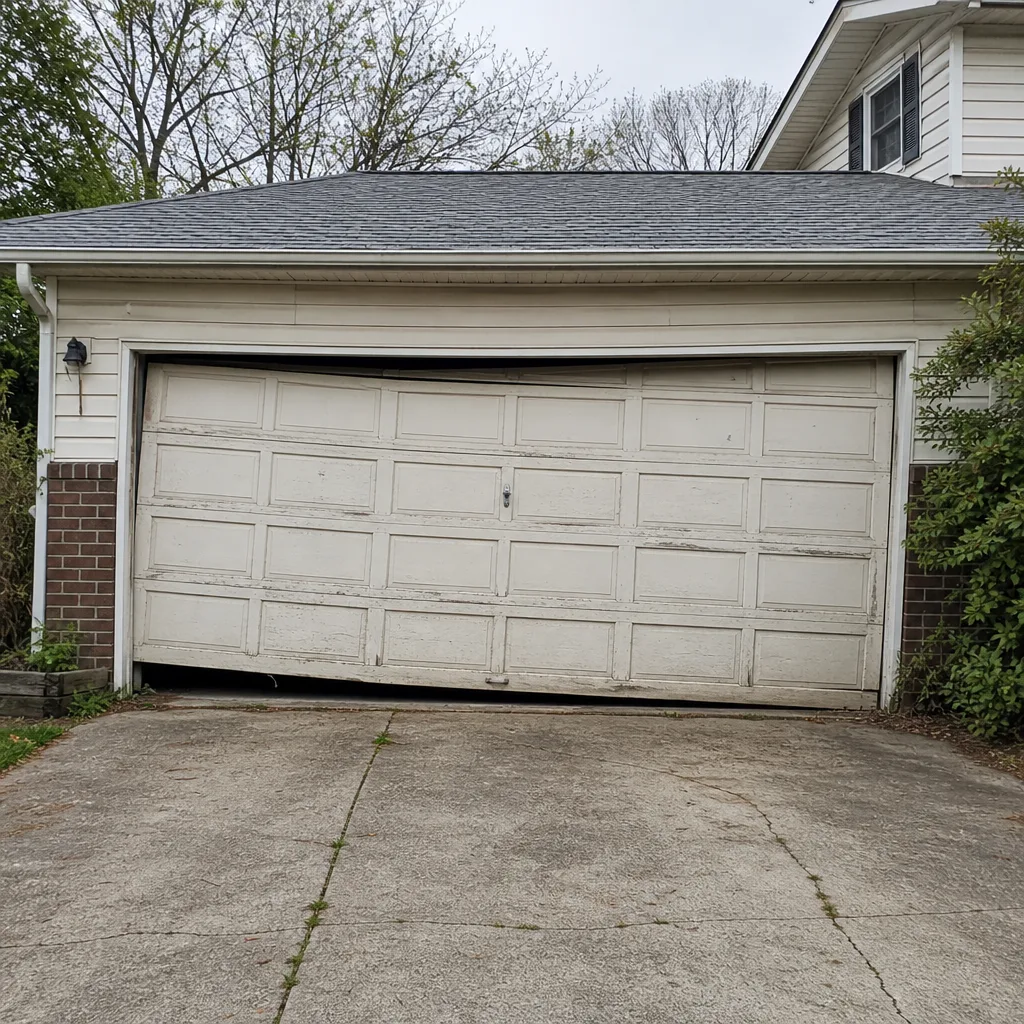 Before
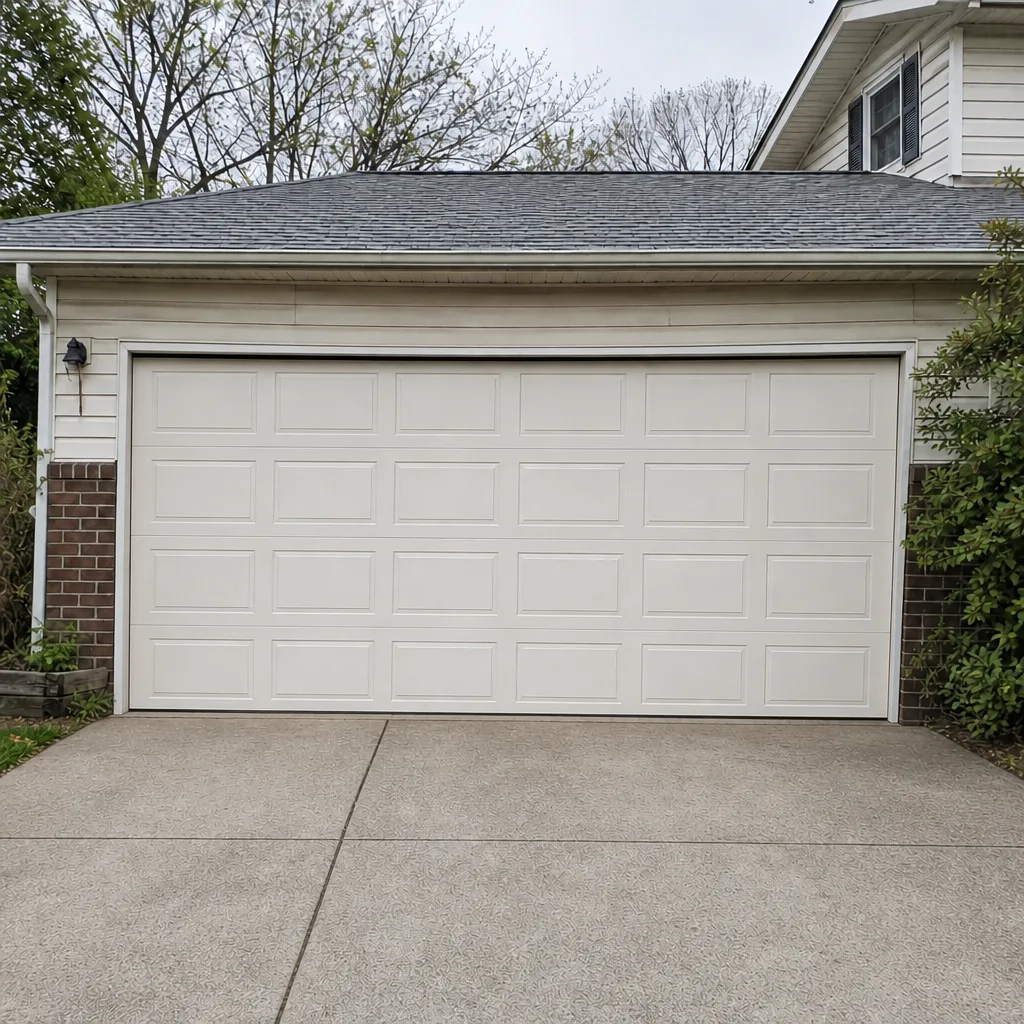 After
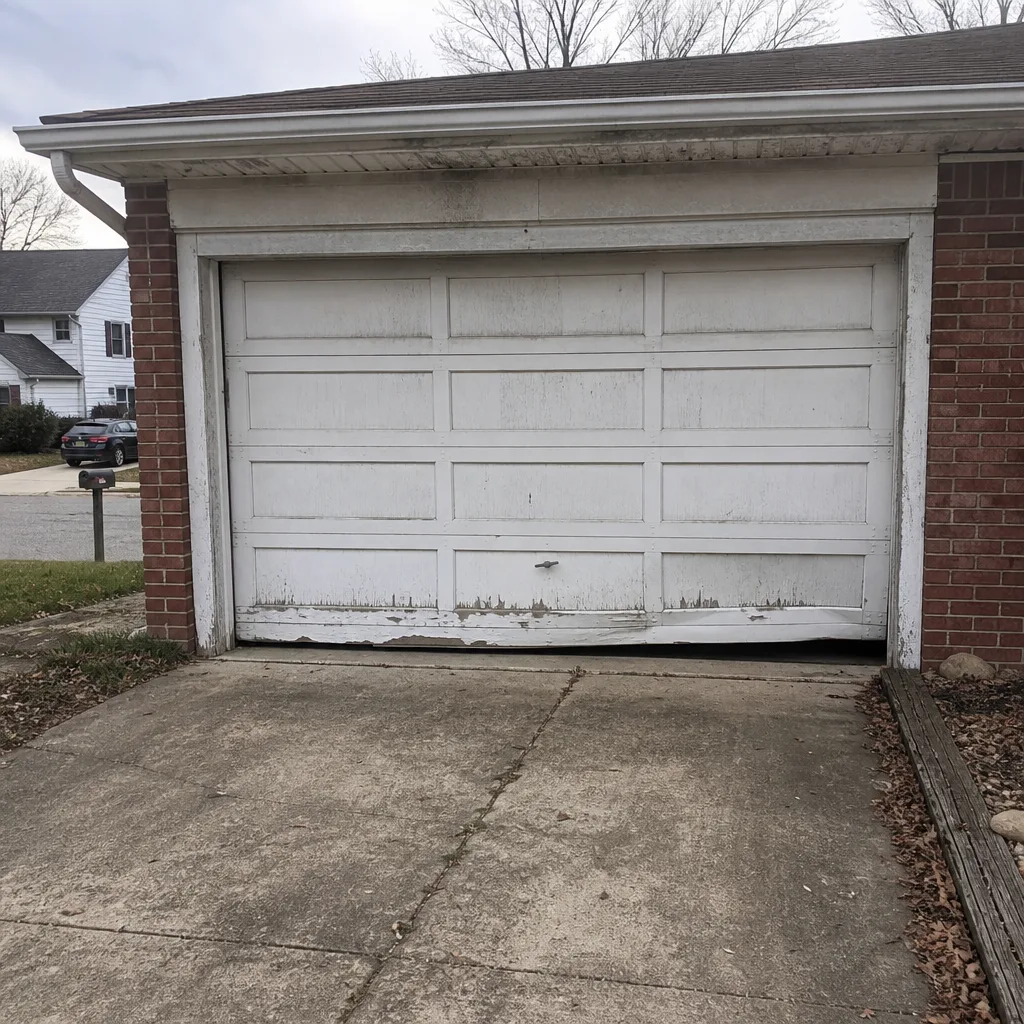 Before
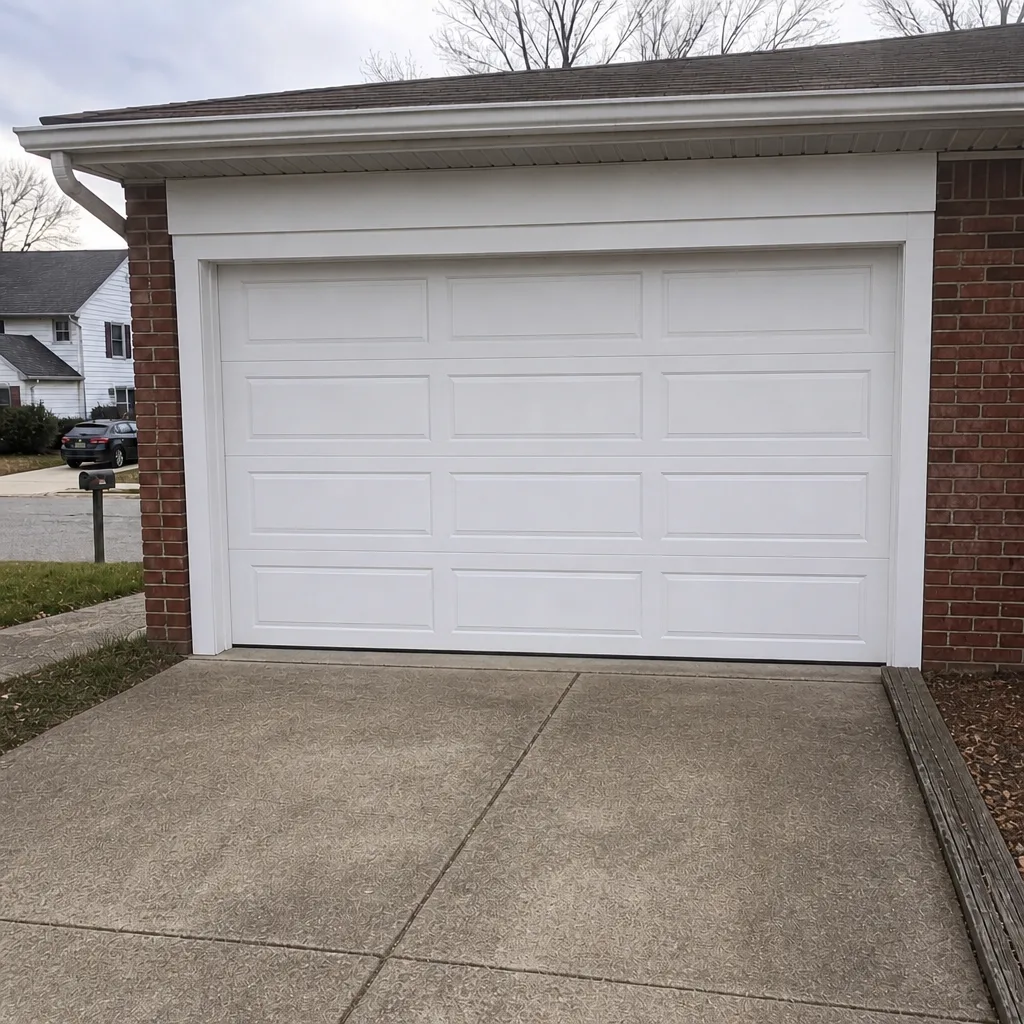 After
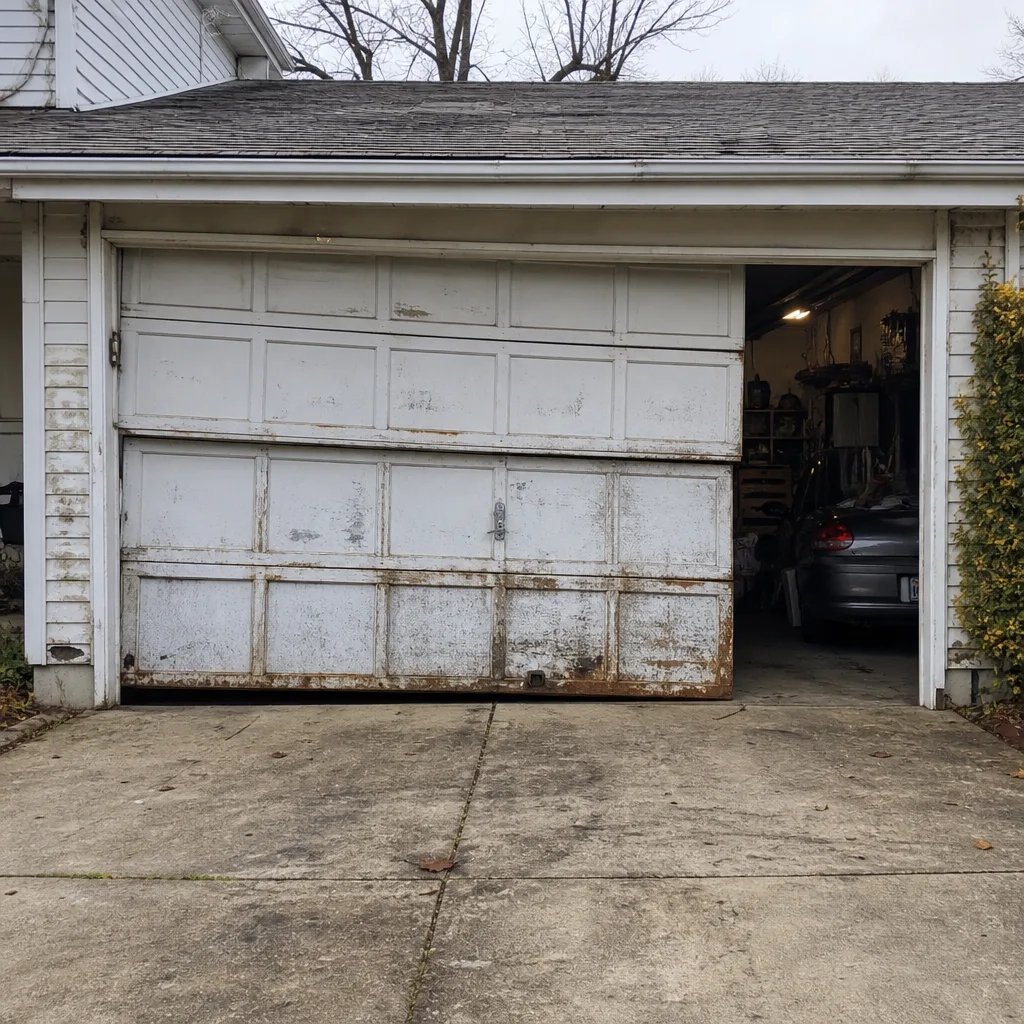 Before
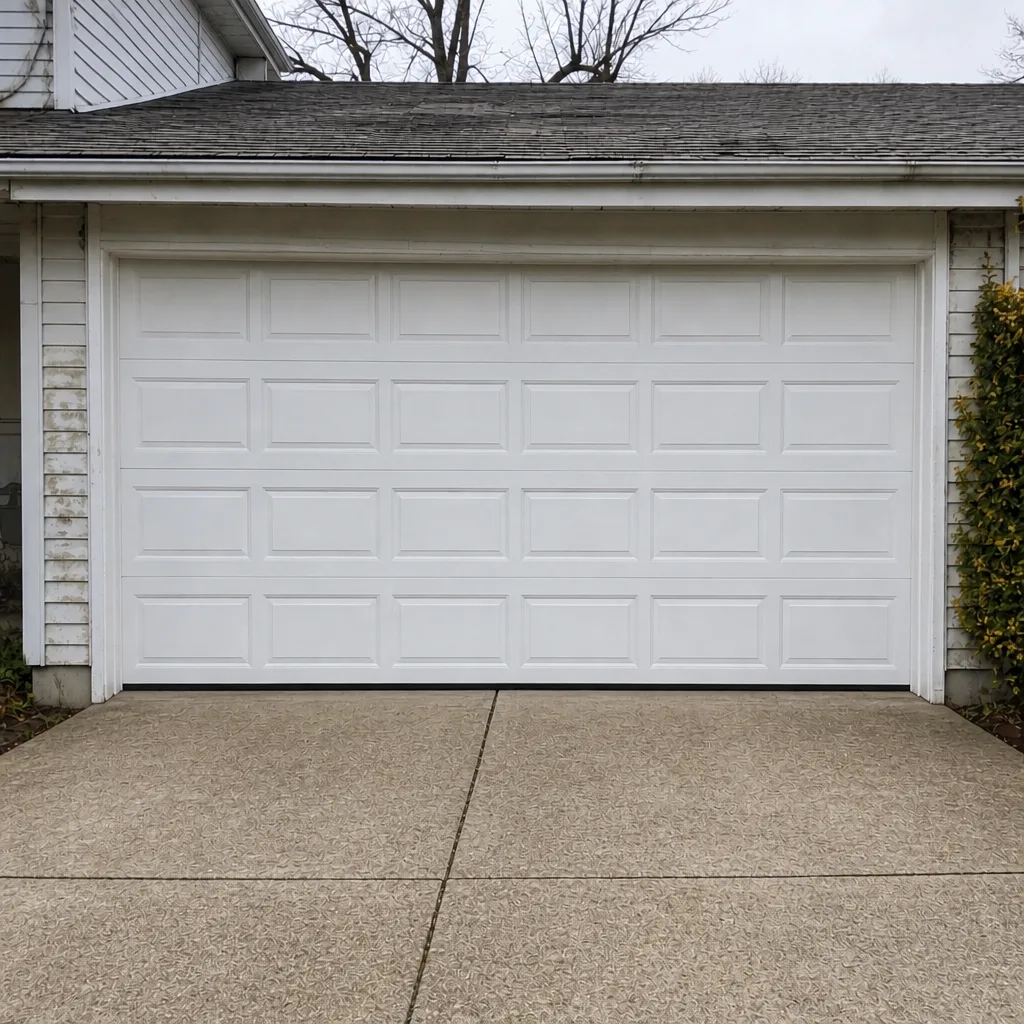 After
When to Call a Professional
A permit question is a paperwork question, but the work behind it isn’t. Call a professional before you touch anything if your door is more than a decade old and you’re planning a replacement, because the opening may not be what you think it is. Call if a panel is damaged and you’re unsure whether a matching replacement exists for your model. Call if your opener needs a new circuit, since that’s electrical work and it overlaps with the permit conversation. And call immediately if a spring has snapped or a cable has come loose. Springs and cables are high-tension components under constant load, and this is not a DIY repair. A spring failure can cause serious injury, so it needs trained hands.
Garage Door Repair Cherry Hill offers free estimates in Cherry Hill. Our technicians have up to 12 years of experience, and every one of them works exclusively on garage doors rather than a rotating menu of home services. We handle the full range, from garage door spring repair to a new installation, so you don’t need a second company when repair stops making sense. Call (833) 508-9337 for a free estimate.
Frequently Asked Questions
It depends on whether the work qualifies as like-for-like. A replacement door of the same size and type in the same opening, with no structural or electrical changes, is often treated as maintenance and may not need a permit, while a new opening, a changed opening size, or new opener wiring generally does. Confirm with Cherry Hill Township’s building department before work starts, because they make the determination. Call (833) 508-9337 for a free estimate on the door work itself.
An unpermitted installation can surface as an open violation during a title search when you sell, which is the worst possible time to discover it. The usual path forward is to have the work reviewed by the construction office and brought into compliance, which may involve an inspection or corrective work. The cleanest approach is to permit the job before it starts. If you’re unsure whether an existing installation was permitted, ask the township to check the record on your address.
An opener installed on an existing outlet usually doesn’t require a permit. If the installation needs a new circuit, a new receptacle, or rewiring of an existing one, that’s electrical work and generally requires an electrical permit through the same construction office. Ask the building department to confirm for your specific setup, and mention whether the opener is a replacement or a first-time installation.
Timelines vary with the construction office’s workload and how complete the application is, so there’s no single number we can give you. Applications that arrive with full manufacturer specifications, wind-load ratings, and drawings for any structural work move faster than incomplete ones. Cherry Hill sees a seasonal surge in residential applications during spring and summer, so a job planned for those months benefits from starting the permit process earlier. The building department can tell you the current turnaround.
The local professionals we connect you with are licensed and insured as their state requires. We’re garage door specialists, not a general handyman operation, and every technician works exclusively on garage doors. If you want to see credentials before work begins, ask, and we’ll make sure you have what you need. Call (833) 508-9337 for a free estimate.
No. We quote the job and agree the price with you before any work starts, and the written estimate is what sets the final number. If something unexpected turns up during the job, such as a damaged header or a track that can’t be reused, we stop and talk to you about it before proceeding rather than adding it to the invoice afterward. Call (833) 508-9337 for an exact quote, estimates are free.
Does a New Garage Door Increase My Home’s Value in Cherry Hill?
A new garage door tends to be one of the more visible improvements a homeowner can make, since it’s the largest moving element on the front of most Cherry Hill houses and it’s seen every time someone pulls into the driveway. Value is a real-estate question we’re not qualified to price, but there’s a practical side to it that we can speak to. A door that’s properly permitted, correctly rated for wind load, and documented with a signed-off inspection is a cleaner asset at resale than one with an open question attached to it.
Buyers and their inspectors ask about the garage. A door that operates smoothly, reverses on obstruction, and has springs matched to its weight reads as a maintained home. A door that slams, binds, or has a spring that’s clearly the wrong size for the panels above it reads the opposite way, even if nothing is technically broken yet.
If you’re replacing before a sale, get the permit question answered first, then the door order, then the install, then the inspection. That sequence produces the documentation that makes the improvement count. Skip the first step and the rest of it can become a problem to solve at the closing table. Reach us at (833) 508-9337 for a free estimate on the door, and we’ll help you figure out whether it’s a repair or a replacement that makes sense.
The Bottom Line
Garage door permits in Cherry Hill come down to one distinction: changing the structure versus restoring it. A new opening, a resized opening, structural repair, or new opener wiring generally needs a permit through Cherry Hill Township’s construction office. A same-size, same-type replacement in an unchanged opening often doesn’t, but that’s a determination for the building department, not for us or for whoever is selling you the door. Wind-load ratings, opener safety devices, and the paperwork trail all matter, and they matter most at resale. Handle the permit before the install, keep the signed-off record, and treat a professional install as the baseline, not a luxury. If your door is failing rather than being replaced, skip the permit question and call us. We answer 24/7. Fast dispatch from 7am to 7pm, Sunday through Friday.
Garage Door Repair Cherry Hill covers the full range of garage door repair, garage door opener repair, spring work, and new installations across Cherry Hill and the surrounding area, working on the brands most homes actually have. Call (833) 508-9337 for a free estimate. Estimates are free, the price is agreed before work starts, and our technicians have up to 12 years of experience on garage doors specifically.
Written by the team at Garage Door Repair Cherry Hill.