
Last updated November 23, 2026
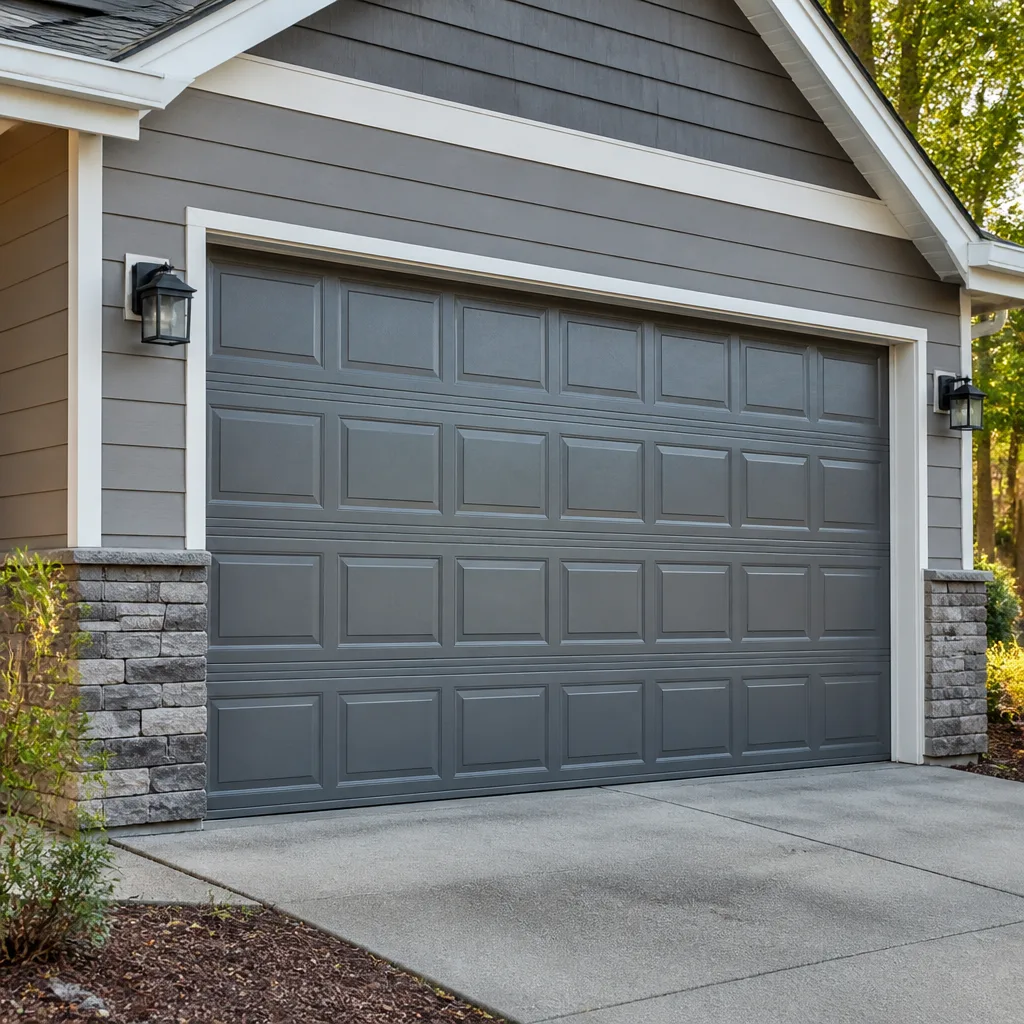 Raised-panel steel
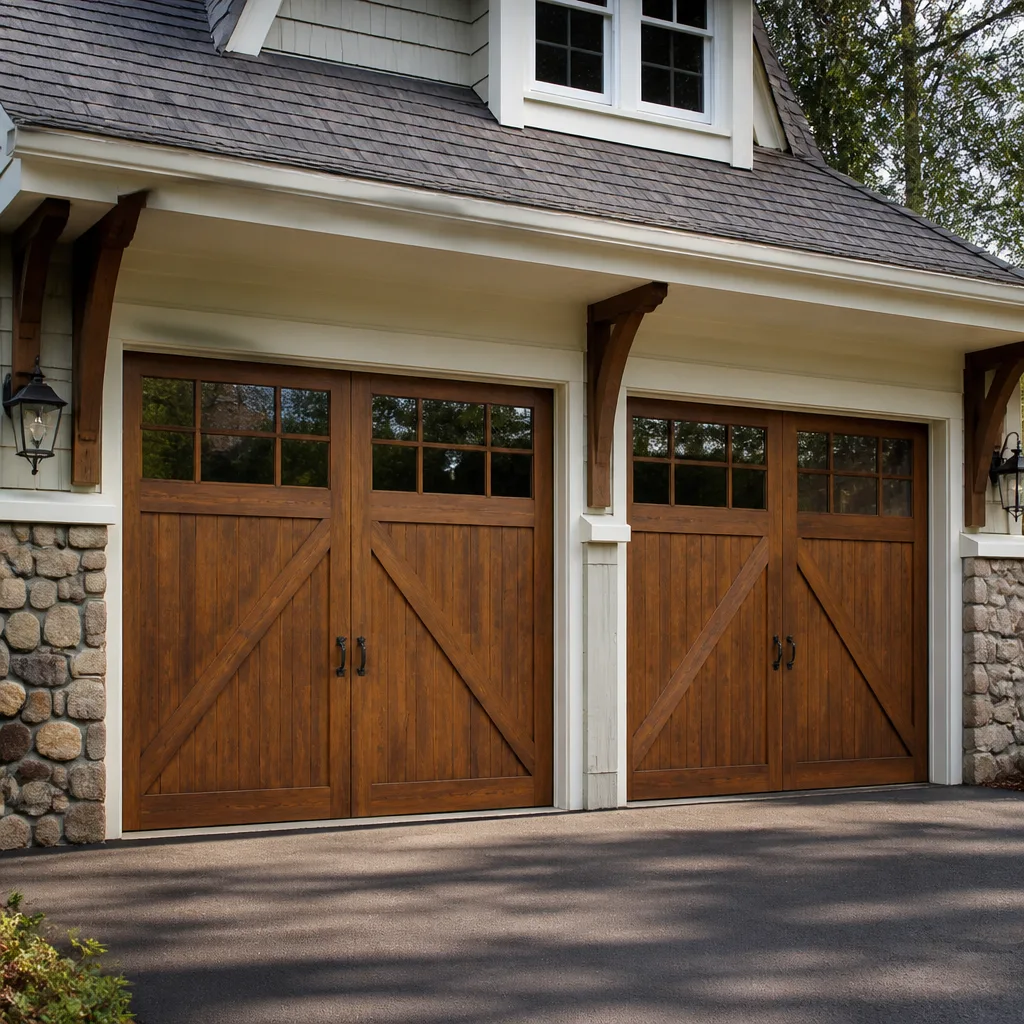 Carriage house
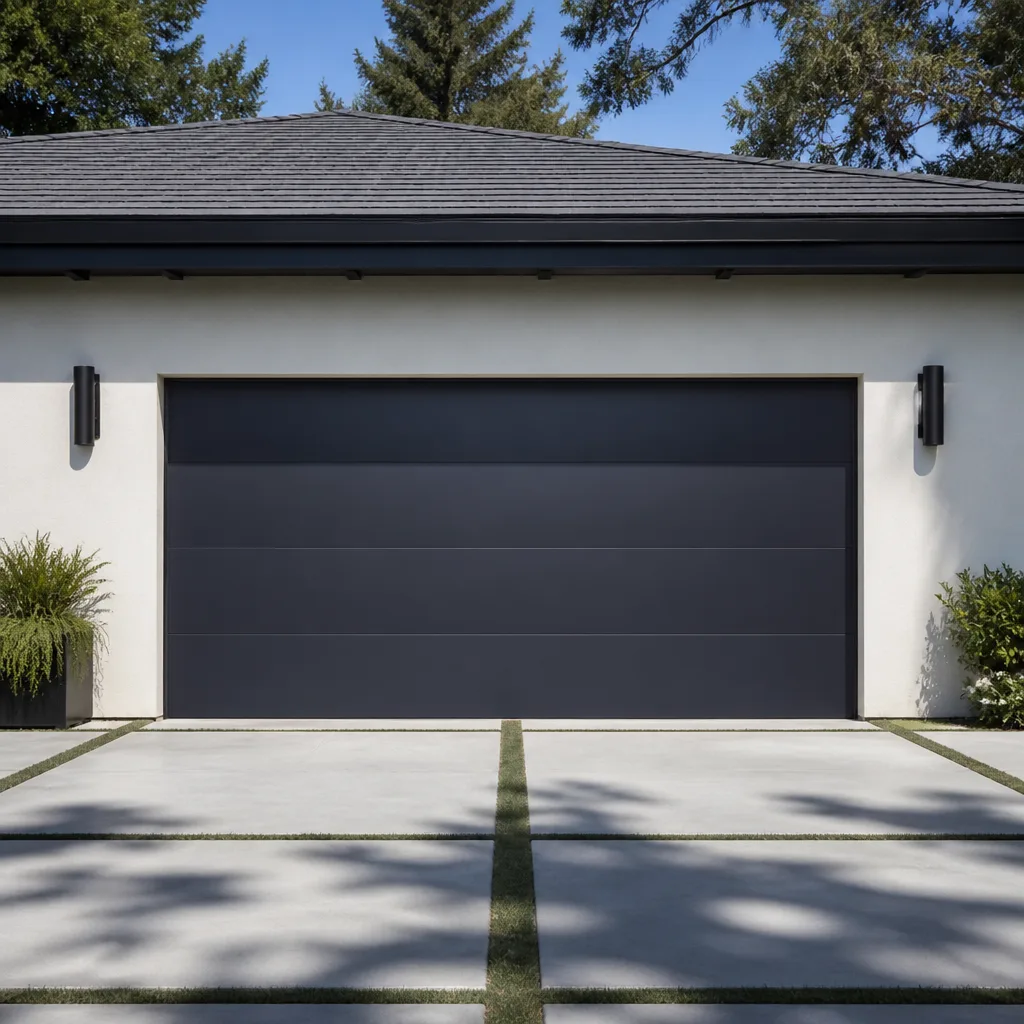 Modern flush
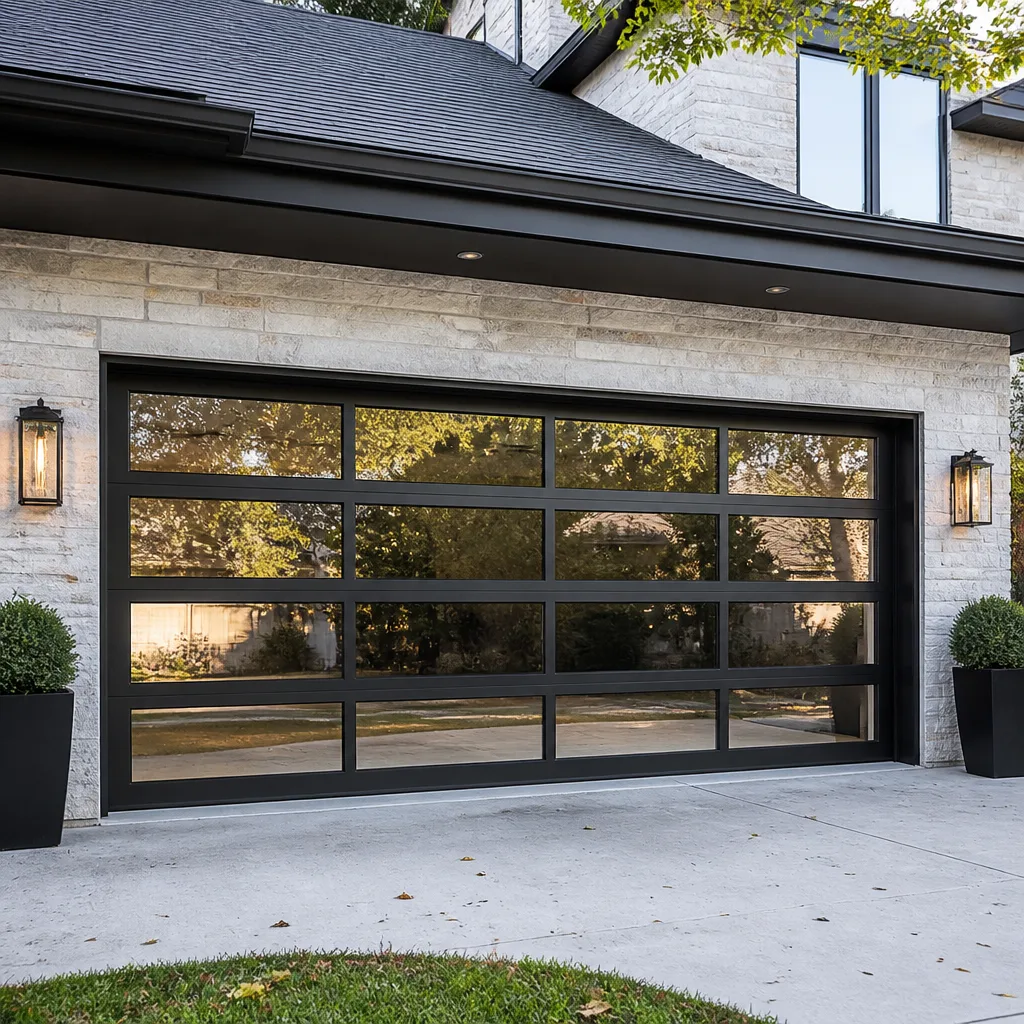 Full-view glass
 LiftMaster openers
 Chamberlain openers
Full 25-point door and opener safety check with every visit - springs, cables, rollers, tracks, and your LiftMaster or Chamberlain opener included
You get a price before we start. It does not change when the pro arrives.
Get your free estimateGarage Door Warning Signs: A Cherry Hill Homeowner’s Reference Guide
A door that takes two seconds longer to open than it did six months ago isn’t just slow. It’s telling you the spring tension has drifted and the opener motor is quietly compensating for it, and that arrangement wears out both parts at once. Most garage door failures we’re called out to in Cherry Hill announce themselves well in advance. The trouble is that the signals are easy to misread as normal aging, so people wait until a car is trapped or a door hangs crooked. This guide explains what each sound, movement, and visual cue actually points to, so you can judge whether a problem is a “schedule it this week” item or a “stop using the door” item.
Quick Answer
Garage door warning signs fall into three groups: sounds (grinding, popping, squealing, banging), movement (sagging on one side, jerky travel, slow response) and visuals (rust on springs, frayed cable strands, a cracked bottom seal). Grinding and jerky travel usually mean a worn roller, dry hinge, or a door that’s gone out of balance – book it soon. A loud bang with a door that won’t lift, or a visibly broken spring or frayed cable, means stop using the door and call a specialist. Spring and cable work is high-tension and not a DIY job.
Styles & brands we work with
- Raised-panel steel
- Carriage house
- Modern flush
- Full-view glass
- LiftMaster openers
- Chamberlain openers
Table of Contents
- Start Here: Why Doors Fail on a Schedule
- What the Noise Is Telling You: A Sound-Based Diagnosis
- Movement Clues: Sagging, Jerking, and Slow Response
- Visual Signs You Walk Past Every Day
- Fix-It-This-Week vs. Stop-Using-the-Door
- Symptom Reference Table
- Cherry Hill Climate and the Seasonal Wear Pattern
- A Simple Monthly Walkaround
Start Here: Why Doors Fail on a Schedule
Garage doors aren’t random. Every component wears at a predictable rate, and the parts lean on each other in a way that hides early decay. A torsion spring loses a little tension, an opener motor works a little harder to lift the door, the extra effort wears the gears inside the opener, and by the time one part fails loudly the other has been strained for months. In our experience, that’s why so many homeowners describe a failure as sudden when the warning signs were there for weeks.
The first thing to understand is which parts you’re listening to. A standard residential door in Cherry Hill runs on rollers that travel in a track, hinges that connect the panels, a torsion spring or two above the door, and lift cables on each side. The opener is a separate motor that pushes or pulls the door along. When you hear a noise, it’s almost always coming from the door hardware, not the opener – the opener is just the thing that makes the strain audible.
Two numbers shape everything else. Our technicians have up to 12 years of experience, and in that time the single most common pattern is a minor balance issue that gets ignored until a spring takes the brunt of it. Springs are rated by cycle count – the number of open-and-close cycles before they’re expected to break. A door you open four times a day wears its springs far faster than one you open once, which is why usage matters more than calendar age when you’re judging a spring’s health.
The other pattern is the one homeowners miss because it’s quiet: an opener that runs the door with a slightly different effort than it used to. Modern openers from Genie and others monitor resistance and will reverse if the door meets too much force. A door that occasionally reverses halfway up isn’t faulty – it’s the safety system doing its job on a door that needs attention. For a full breakdown of how those systems work, see our garage door opener repair page.
What the Noise Is Telling You: A Sound-Based Diagnosis
Every sound has a mechanical cause, and the sound’s location narrows it down. Grinding, popping, squealing and banging each map to a different set of parts. Here’s what each one typically indicates.
Grinding
Grinding is metal-on-metal, and it usually means a roller is seized or a bearing has dried out. Instead of rolling smoothly in the track, the roller skids, grinding against the steel. Left alone, a seized roller will wear a flat spot on the track and start to make the whole door jump. Grinding is a “schedule it this week” signal – it rarely fails instantly, but it accelerates wear.
Popping
A single sharp pop, especially as the door starts to move, points to a slipping cable or a worn hinge. Repeated popping as the door rolls can mean a bent track section – the roller hits a kink and pops over it. If the popping comes from up near the spring assembly, treat it as high-priority and have it checked before you run the door again.
Squealing
Squealing is the friendliest of the four. Nine times out of ten it’s dry hinges, dry rollers, or a dry torsion shaft bearing. A proper lubrication pass handles it. Don’t reach for ordinary household spray that gums up; a garage door specific lubricant is what the hardware wants. See our garage door repair Cherry Hill service page if the noise returns a week after you’ve lubed things up.
Banging
Banging is the one to take seriously. A loud bang followed by door that won’t move means a torsion spring has broken. A steady bang at each open or close can mean the door is badly out of balance and slamming under its own weight. Both are stop-and-call scenarios. For the spring side specifically, our garage door spring repair page explains what replacement involves.
Movement Clues: Sagging, Jerking, and Slow Response
Movement tells a story the sounds sometimes don’t. When you watch the door run a full cycle, watch the gap between the door’s bottom edge and the floor on both sides as it lifts. If one side lags by more than a couple of inches, the door has gone out of balance.
- Sagging on one side. Usually a stretched or damaged lift cable on one side, or a broken spring on a two-spring setup. The door is being pushed by one side only. Don’t run it – the door can twist and come off the track.
- Jerky travel. A seized roller, a bent track section, or an opener force limit set too high masking a problem. Jerky is usually mechanical rather than electrical.
- Slow response. If the opener takes an extra beat before the door moves, or the door moves slower than it used to, the motor is working harder than it should – often a sign the door is out of balance. Genie and similar openers will often start to stall on a door that needs adjusting.
- Reversing halfway. This is the safety system reacting to force it doesn’t expect. Don’t force it. The door needs an eyes-and-hands inspection.
- Door stops short. Limit switches are out of adjustment, or the door is meeting something in the track that shouldn’t be there.
In Cherry Hill, one pattern we see more than most comes from the number of houses with attached garages where the door faces the weather directly. The door that gets the morning sun has its hardware expand and its wood panel edges dry out, both of which shift the balance slightly across the seasons. That’s not a defect – it’s normal – but it means a door that was fine in July can bind in January. A balance check is part of what our upfront estimate covers.
Visual Signs You Walk Past Every Day
You walk past your door every day. Most homeowners look at it without seeing it. Here’s what to actually look at.
- Rust on the springs. A light surface film is normal. Pitting or streaking along the coil is not – it means the spring’s coating has worn and moisture is getting into the steel. Pitting is where spring failures begin. Don’t touch the spring to check it.
- Frayed cable strands. Look along the cables on each side of the door, near the bottom corner brackets and up near the drums. A cable that’s supposed to be a smooth bundle of strands but has loose whiskers or a broken wire sticking out is nearing failure. Never touch a frayed cable – call a specialist.
- Cracked bottom seal. The rubber seal along the door’s bottom edge keeps water and insects out. When it cracks, water can slip under the door, and in a freeze cycle it can also split. Replace it before it becomes a door problem.
- Bent track sections. Crouch down and sight along each track from the bottom. A dent the size of a coin that you can see is enough to make a roller catch.
- Uneven gaps around the door. Light visible under the door on one side and not the other points to a balance or track issue, not a seal problem.
- Loose hinges. Grab a hinge (door down) and give it a gentle wiggle. A wobble means loose fasteners or a worn hinge leaf.
A Wayne Dalton or Clopay steel door has a slightly different panel profile, but the inspection list is the same – steel panels hide rust a bit better than wood, so look for paint blistering and streaking at panel edges. Our full garage door repair service covers each of these checks as part of a service call.
Fix-It-This-Week vs. Stop-Using-the-Door
The most useful judgment a homeowner can make is whether a sign is urgent or just worth scheduling. Here’s how we sort it.
Stop using the door now
- A loud bang and the door won’t lift on its own.
- A visibly broken spring (a clean break across one coil or a spring with a visible gap).
- A frayed or snapped cable.
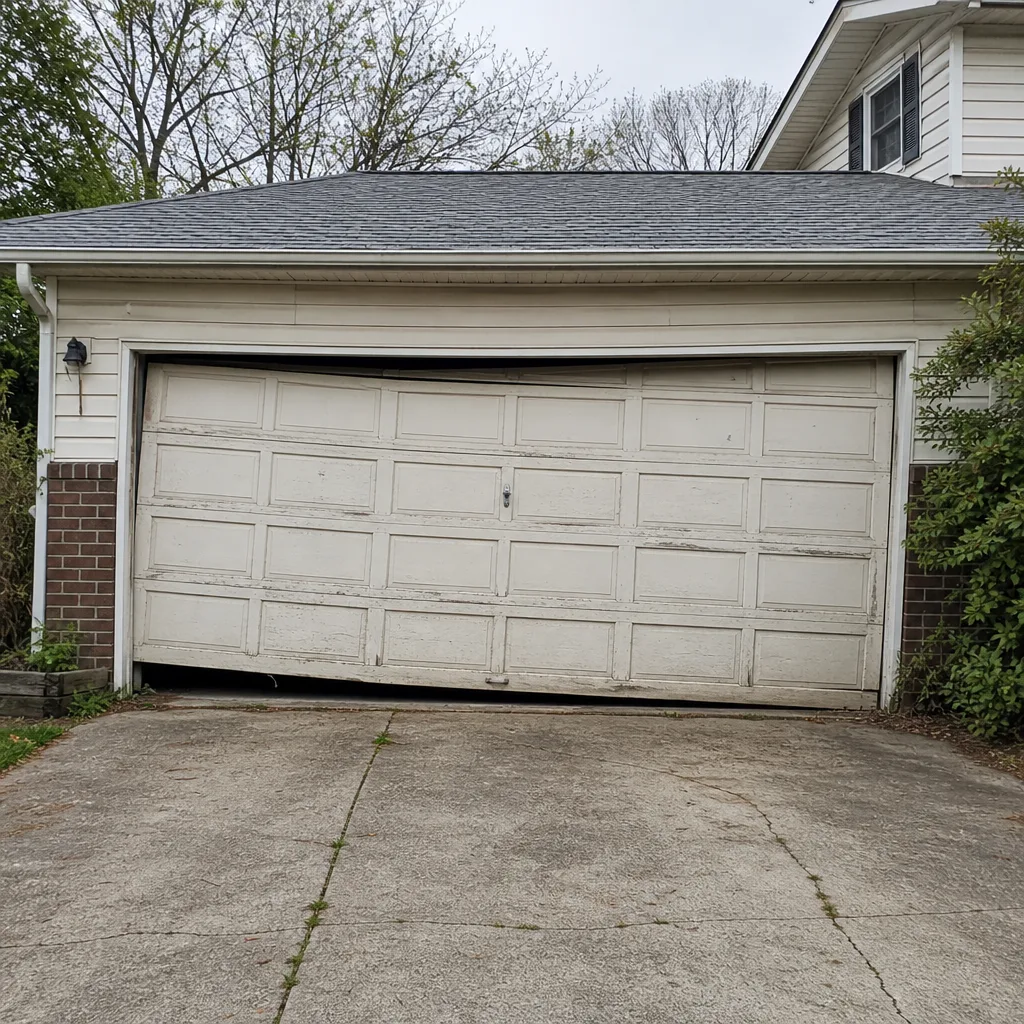
- A door off one of its tracks or hanging crooked.
- An opener that reverses on a door you have to force to close.
- An opener that runs but the door doesn’t move.
For any of these, disconnect the opener so no one can trigger the door remotely, and call. Springs and cables are the highest-risk components on the door and should only be handled by a trained technician.
Book for this week
- Grinding on the way up or down.
- Jerky travel.
- Occasional reversing on a door that otherwise runs fine.
- A door that sags less than a couple of inches.
- Rust starting to pit on the springs.
These signs accelerate. A jerky roller becomes a bent track; pitting springs become broken springs. If a Cherry Hill homeowner calls us with one of these, we can usually schedule it in the same week. If you’re unsure which bucket your door falls into, describe what you’re seeing and hearing when you call – the answer is usually obvious once we’ve asked two or three questions.
Symptom Reference Table
Here’s the quick-lookup version. Treatments marked “professional” involve high-tension parts or electrical work and should not be attempted by the homeowner.
- Loud bang, door won’t lift → broken torsion spring → urgent, stop using → professional only.
- Frayed or snapped cable → worn or failed lift cable → urgent, stop using → professional only.
- Doors hangs crooked, off one side → cable problem or one of a two-spring pair has failed → urgent, stop using → professional only.
- Squealing → dry hinges, rollers, or shaft bearings → schedule this week → lubrication is DIY-safe; a technician if it returns.
- Grinding → seized roller or worn bearing → schedule this week → professional.
- Popping on start → slipping cable or worn hinge → schedule this week → professional (if from spring area, urgent).
- Jerky travel → bent track, seized roller, or opener force setting → schedule this week → professional.
- Reverses randomly → safety system reacting to resistance → schedule this week; stop using if consistent → professional.
- Cracked bottom seal → aged rubber → schedule within a month → DIY-safe on many doors; professional if the seal is integral.
- Rust pitting on springs → coating failure → schedule this month → inspection professional; never touch.
- Non-functioning remote → battery, pairing, or opener logic board → schedule soon if a wall button still works → DIY-safe to try a battery; professional for the rest.
- Door stops reverse function working → safety sensor issue → urgent as safety matter → professional.
Cherry Hill Climate and the Seasonal Wear Pattern
South Jersey weather is easy on doors most of the year, then tests them in a few hard stretches. The pattern around Cherry Hill is consistent: mild springs and falls, humid summers, and winters with enough freeze-thaw cycles to matter.
Humidity is the big invisible factor. Summer air in Cherry Hill carries real moisture, and that humidity works into every hinge, roller, and bearing. Rust on springs and cables is the visible result. If your garage is uninsulated (most are), the door spends July and August at near-outdoor humidity, which is why we see rust pitting on springs in Cherry Hill that would be fine in a drier climate.
Winter has the opposite problem. Steel and wood contract in the cold, and the door sits slightly differently in its tracks than it did in summer. The bottom seal gets stiffer. The springs stiffen. That combination is why a door that ran fine in November starts to feel heavy and jerky in January – the balance has shifted, and the opener is doing more of the work. A door that’s already out of balance by mid-fall will usually show its worst behavior in the first cold snap.
There’s a local pattern too, in the older housing stock around neighborhoods like Erlton and Kingston: many doors on those streets are original to the house, and the hardware has done a lot of cycles. That’s not automatically a problem, and it doesn’t mean you need a new door. But a door of that vintage benefits from an annual balance and lube check, because everything wears together and small issues hide each other. We cover the full service in garage door repair, and we’ll tell you honestly when a repair makes sense and when a replacement is the better call.
A Simple Monthly Walkaround
Ten minutes a month catches most of what breaks. Here’s a straightforward sequence.
- Look before you touch. Stand back and look at the door closed. Look for crooked panels, visible spring breaks, and frayed cables. Don’t touch anything in the spring or cable area.
- Open and close once, from the wall button. Watch the door. Note speed, sound, and whether the gap at the floor stays even side-to-side.
- Do the balance test. Close the door, disengage the opener (the pull cord or the release handle), and lift the door by hand about halfway. Let go. A balanced door stays put. A door that falls means a spring issue.
- Lubricate the moving parts. Hinges, rollers, and the torsion shaft bearings. A garage door specific lubricant, not household oil.
- Check the safety reverse. Place a roll of paper towels or a 2×4 under the door and close it. It should reverse on contact. If it doesn’t, treat it as a stop-using issue until a technician inspects.
- Wipe the bottom seal. A wet cloth clears grit that will grind into the rubber. Look for cracks while you’re down there.
- Test the remotes and keypad. A remote that needs an extra press may be a battery or a pairing issue – not the door’s fault.
That’s the full routine. Spring and cable work is the one part you should never take on yourself. They’re under enough tension to cause serious injury if they release, and the correct repair requires the right tools and a trained pair of hands.
Common Mistakes to Avoid
- Calling a handyman for a spring issue. Springs are a specialist’s job, and a generalist shouldn’t be handling them. If the diagnosis is high-tension, it’s a garage door specialist’s work.
- “It only makes that noise in cold weather.” Cold-weather noise is a real thing, but it’s telling you the door is out of balance – not that the noise is normal. Warm weather hides it; treating it as normal lets it get worse.
- Adjusting the opener’s force limit instead of the door. Raising the force limit lets the motor push through a binding door – the binding gets worse and the opener wears out faster. Fix the door; leave the force setting where it should be.
- Ignoring rust on the springs. Surface rust is cosmetic. Pitting is not, and pitting is exactly where a spring snaps. A Cherry Hill summer can move a spring from light rust to pitting in a single season if the hardware never gets looked at.
- Forcing a door that’s off its track. A door that’s hanging crooked can come down. Don’t force it. Don’t run the opener on it. Call a specialist.
- Using a replacement bottom seal that doesn’t match the door profile. A Clopay or Amarr door needs a seal matched to its panel style. The wrong seal leaves gaps.
- Buying a new door when a repair is the answer. Lots of doors get replaced when a track, spring, or opener was the real issue. Have the door looked at before you commit to replacement – if the panels are sound, a repair is usually the right call. Our garage door repair service covers both options and we’ll tell you which one makes sense.
See the difference
 Before
 After
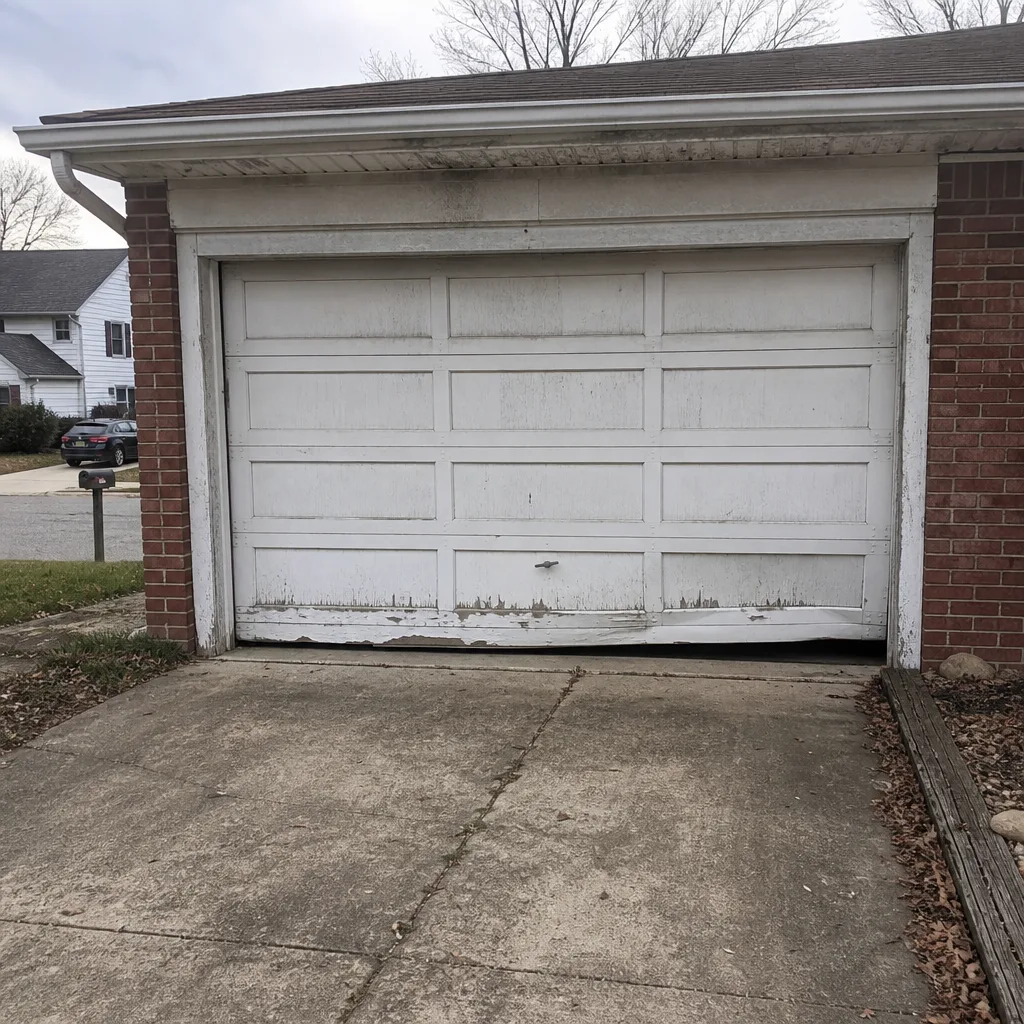 Before
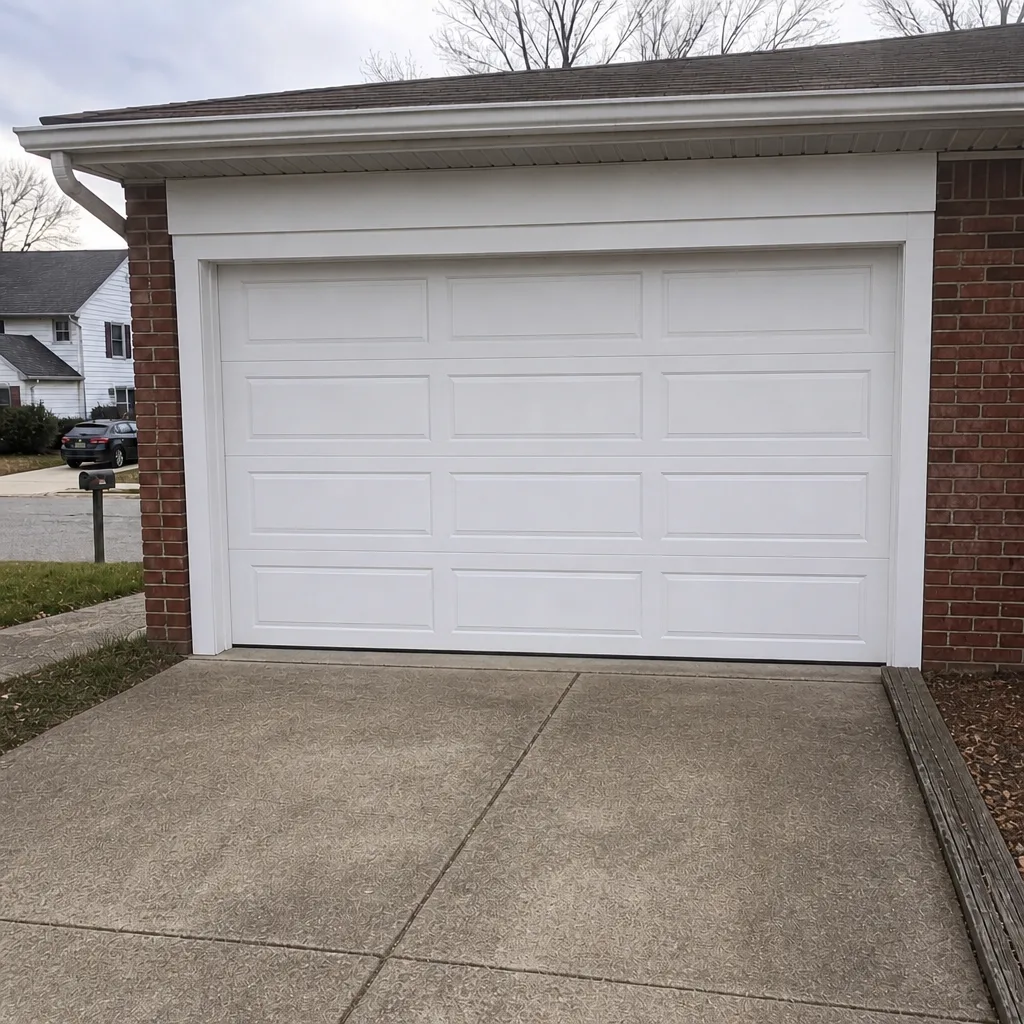 After
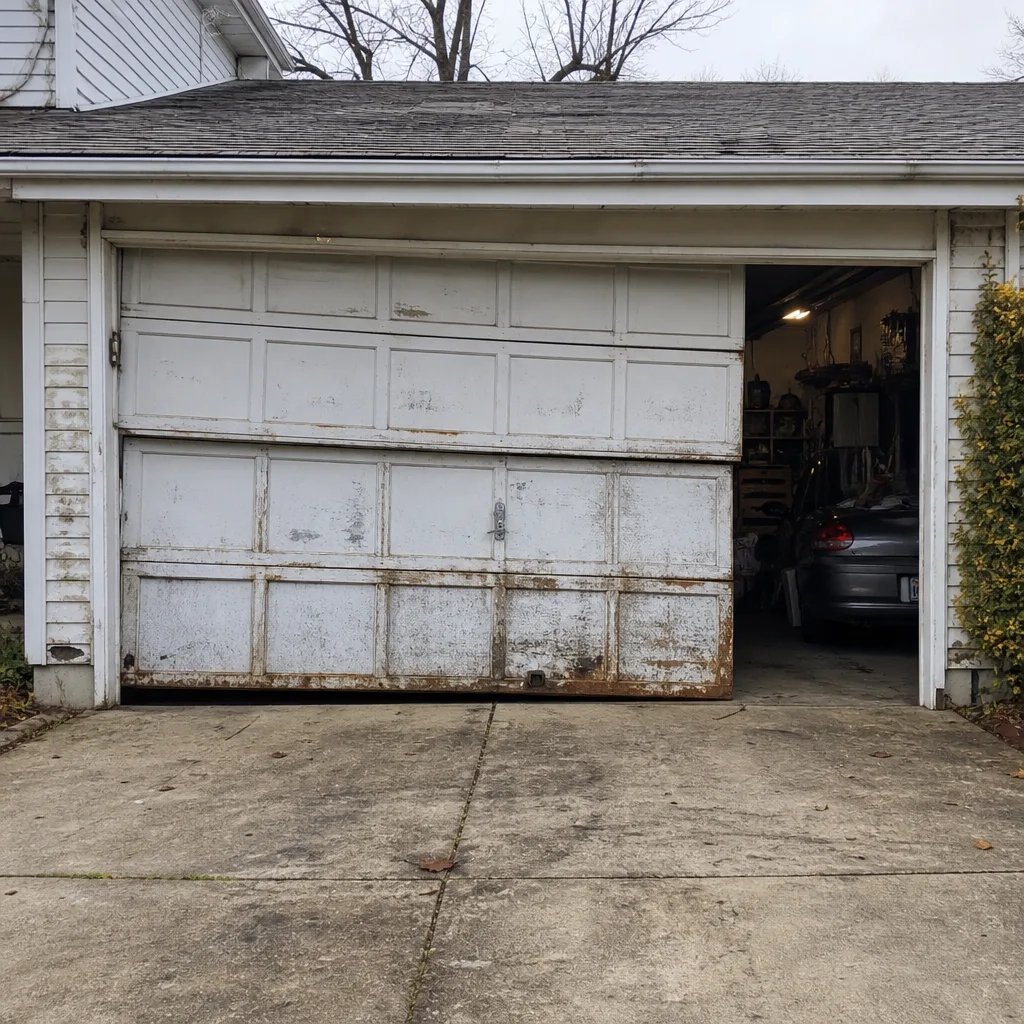 Before
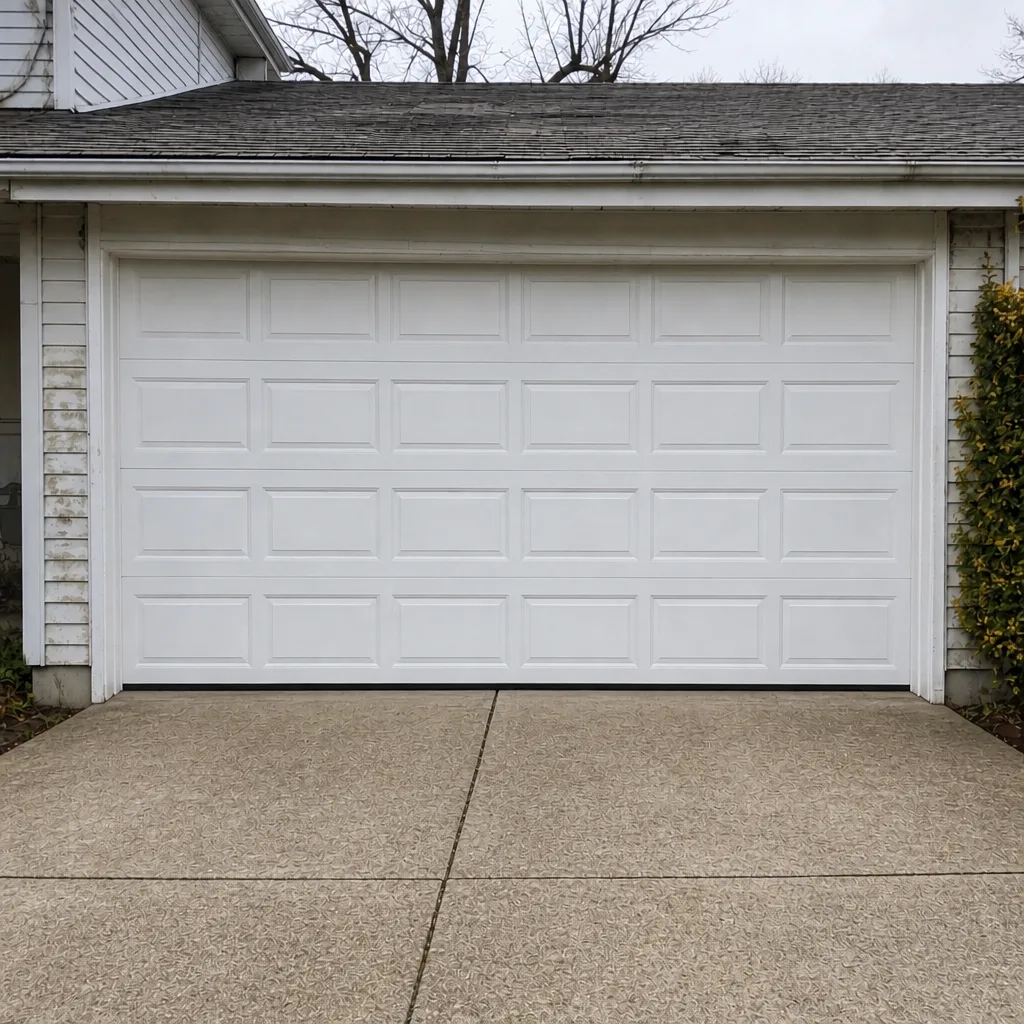 After
When to Call a Professional
Call a specialist for anything in the spring or cable area, any door that’s off its track, any opener that reverses without cause, and any loud bang followed by a door that won’t lift. Those are all high-tension or electrical problems – not a place for DIY. Call sooner rather than later for grinding, jerky travel, sagging less than two inches on one side, or rust that’s pitting. And call if the door’s bottom seal needs replacement on a model where the seal is integral to the panel – that’s more complex than a slide-on seal.
Garage Door Repair Cherry Hill offers free estimates in Cherry Hill. We work on the brand you already own – Genie, Clopay, Amarr, Wayne Dalton, and the other brands most homeowners actually have. Call (833) 508-9337. We answer 24/7. Fast dispatch from 7am to 7pm, Sunday through Friday. Estimates are free, and the price is set per job by the written estimate before any work begins.
Frequently Asked Questions
The most common signs in Cherry Hill are grinding or squealing on the way up or down, jerky travel, one side of the door sagging slightly, rust pitting on springs, and a bottom seal that’s starting to crack. Our humid summers make spring rust more common here than in drier climates. Most of these are schedule-it-this-week signs. Call (833) 508-9337 for an estimate if you’re seeing two or more.
Yes – a broken spring is one of the jobs we handle same day when the schedule allows. Springs are high-tension components, so this is not a DIY repair; a failed spring can cause serious injury. Call (833) 508-9337 and describe the door. We’ll tell you what to expect before we arrive.
Yes. Cold weather stiffens the springs and shrinks the tracks slightly, while summer humidity swells wood and loosens the tolerances on steel doors. A door that complains in January and June is talking about balance, not the weather. An annual check catches the drift before a part fails. Call (833) 508-9337 if the noise has changed this season.
Fix it if the panels are sound, the tracks are straight, and the problem is a spring, cable, opener, or seal. Replace it if the panels are rusted through, cracked, or consistently misaligned, or if a repair is going to cost close to what a replacement costs. We’ll tell you which one makes sense – honest advice on the call, and a written quote either way. Call (833) 508-9337 for a free estimate.
The local professionals we connect you with are licensed and insured as their state requires. Our technicians have up to 12 years of experience and work only on garage doors – not a rotating menu of home services. Call (833) 508-9337 for a free estimate.
No. The written estimate is the price – we quote before any work starts, and we don’t add on for what we find when we’re there. If a problem turns out to be different from what the call suggested, we discuss it with you before anyone touches anything. Call (833) 508-9337 for an exact quote.
Stop using the door. Disengage the opener so no one can trigger it remotely, and call a specialist. A loud bang is almost always a broken torsion spring, and running the opener can damage it further. Call (833) 508-9337 – we answer 24/7.
You can do the monthly walkaround yourself – look, listen, lubricate hinges and rollers, check the safety reverse. Don’t touch the springs or cables; those are the high-tension parts and belong to a trained technician. If the balance test fails, or the door reverses on its own, stop and call (833) 508-9337.
The Bottom Line
Most garage door failures we see in Cherry Hill are the end of a story that started six months earlier with a noise or a slight sag. The parts telegraph their wear well ahead of breaking: grinding points to a seized roller, banging points to a spring, jerky travel points to a track or balance issue, and rust pitting on springs points to a break in the near future. If you learn to read those signals and sort them into “stop using” versus “book this week,” you turn a service emergency into a planned repair. Trust the door when it talks to you. Then call someone who handles only garage doors, not a handyman who’ll treat it as one more item on a general list.
For a free estimate on any warning sign in this guide, call (833) 508-9337. We answer 24/7. Fast dispatch from 7am to 7pm, Sunday through Friday. Free estimates, upfront pricing, written quote before work begins, and a satisfaction guarantee. Same day when it matters.
Written by the team at Garage Door Repair Cherry Hill.